

May 19th 2026
RIKEN, 2-1 Hirosawa, Wako, Saitama 351-0198, Japan
Connecting Finland and Japan Through Quantum Excellence
Join us for an exclusive event dedicated to bridging the thriving quantum ecosystems of Finland and Japan. This gathering is designed to spark meaningful scientific exchange and foster personal connections between two global leaders in innovation.
Organizing Committee
IQM
- Dr. Juha Vartiainen
- Dr. Frank Deppe
- Dr. Mikio Nakahara
Aalto University
- Prof. Christian Flindt
RIKEN
- Dr. Neill Lambert
- Prof. Yasunobu Nakamura
Speakers
RIKEN
Erika Kawakami
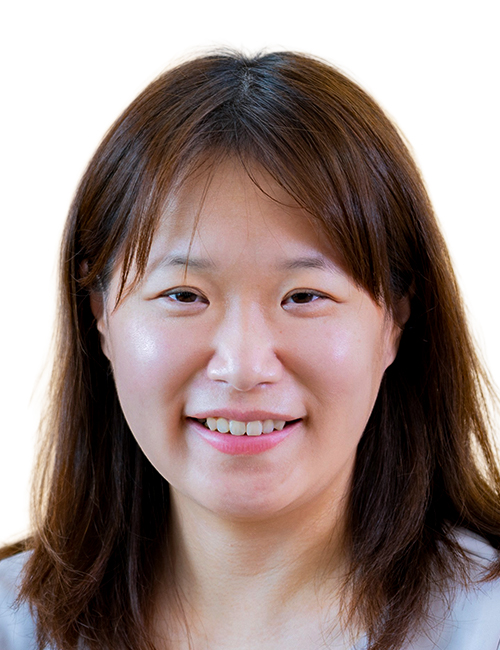
Sylvain de Léséleuc
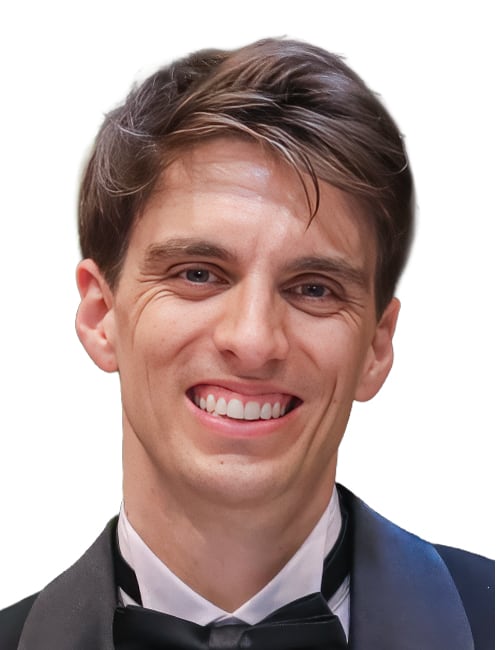
Clemens Gneiting
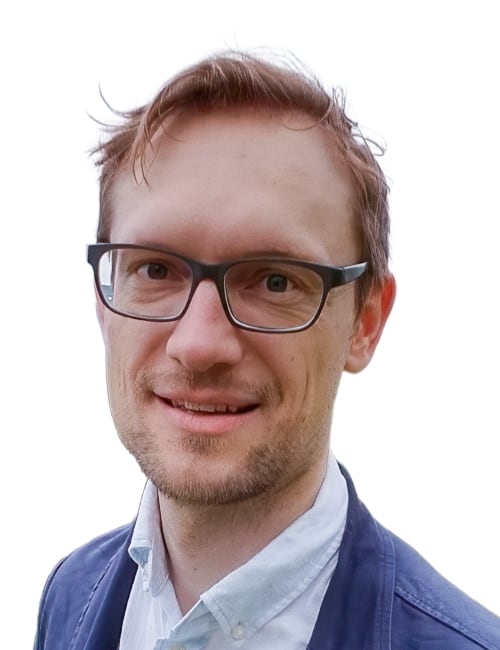
Shotaro Shirai
I received my Ph.D. from the Graduate School of Arts and Sciences at the University of Tokyo in March 2024.
I am currently a postdoctoral researcher at RIKEN, working in superconducting quantum circuits and quantum information processing.
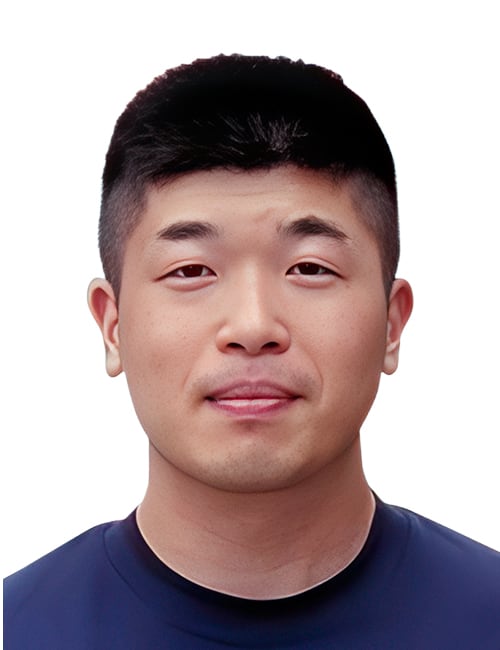
Prof. Dr. Alexandru Paler
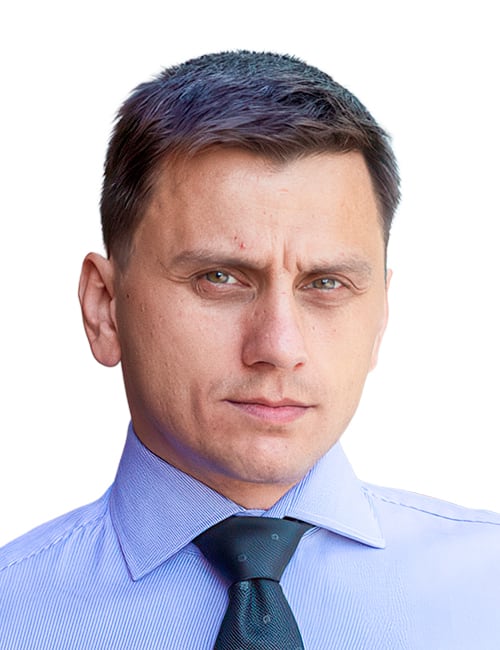
Juho Pirinen
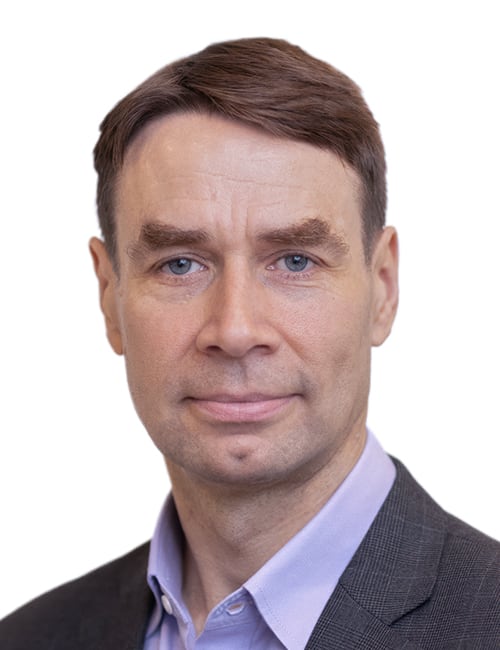
Mikko Möttönen
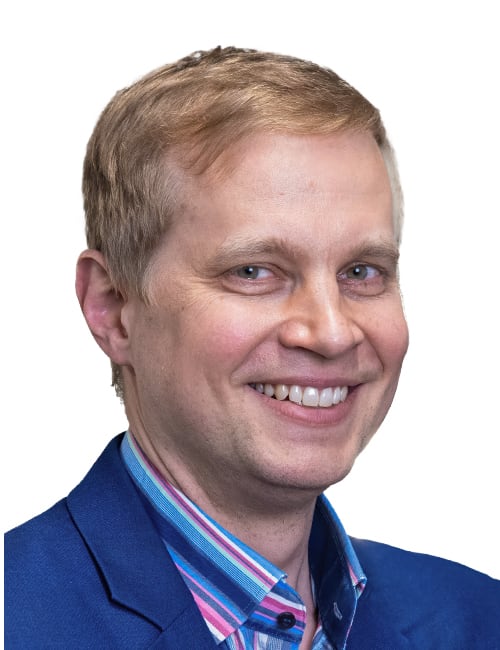
Dr. Kunihiro Inomata
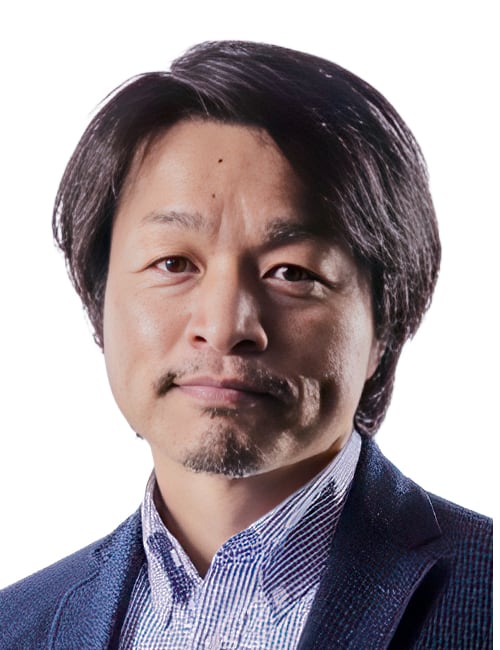
Dr. Tsuyoshi Yamamoto
Tsuyoshi Yamamoto is a joint appointed fellow at G-QuAT, AIST, Tsukuba, Japan. He is a project manager of Moonshot Research & Development program “Development of Superconducting Fault-Tolerant Quantum Computer System” from the Japan Science and Technology Agency.
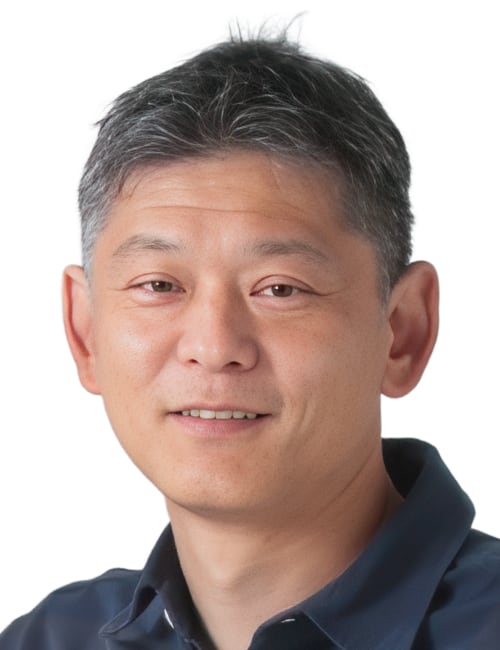
Dr. Juha Hassel
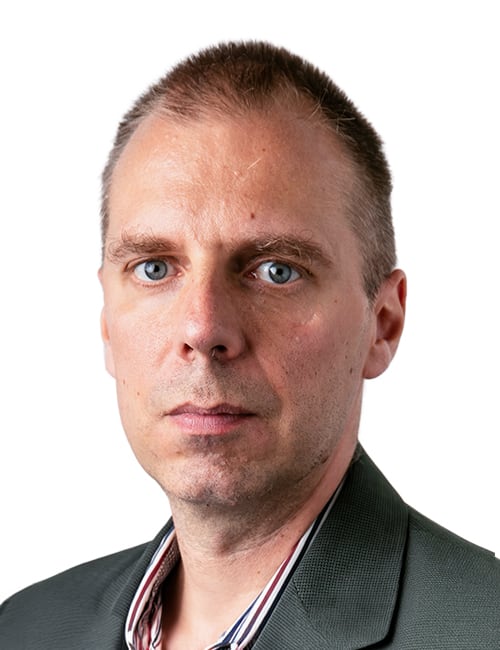
Tampere University
Prof. Robert Fickler
Robert Fickler received his doctoral degree from the University of Vienna (Austria) in 2014 working in the group of Anton Zeilinger. After postdoctoral fellowships at the University of Ottawa (Canada) in the groups of Bob Boyd and Ebrahim Karimi and the IQOQI-Vienna (Austria) in the group of Marcus Huber, he joined Tampere University (Finland), where he is leading the Experimental Quantum Optics group as a Professor in Photonics. Together with his group, he is working on complex structures of photons for high-dimensional quantum information as well as quantum foundations. The group further works on structuring matter waves and investigates fundamental light-matter interactions schemes. He was awarded the Academy Research Fellowship of the Research Council of Finland in 2020 and the ERC Starting Grant by the European Union in 2021.
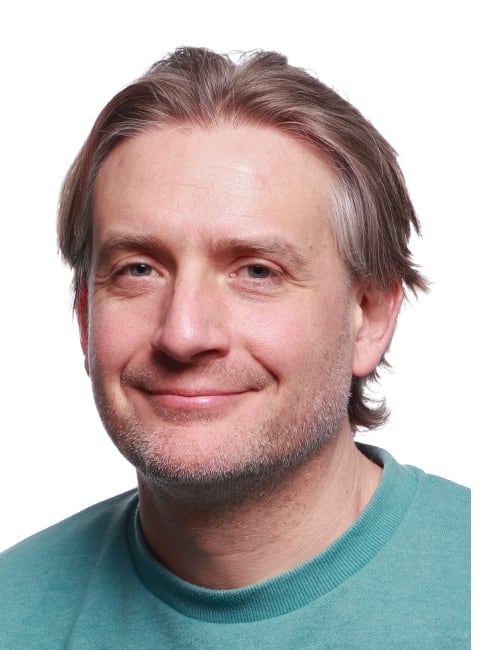
Algorithmiq
Prof. Sabrina Maniscalco
Coming Soon
Sponsors / Organizers
RIKEN RQC (Riken Center for Quantum Computing)
Program
- 08:45-09:15
Arrival and registration - 09:15-09:55
Welcome- Yasunobu Nakamura — RIKEN
- Juha Vartiainen — IQM
- Juho Pirinen — Aalto
Finland’s Quantum Ecosystem: From Scientific Excellence to Global Collaboration
- 09:55-10:45
Superconducting qubits- Mikko Möttönen — Aalto
Autonomous Quantum Machines and NISQ Quantum-Advantage Algorithm - Kunihiro Inomata — AIST
Gain Enhancement in a Josephson Traveling-Wave Parametric Amplifier by Geometric
- Mikko Möttönen — Aalto
- 10:45-11:15
Coffee - 11:15-12:30
Algorithms & Quantum Error Correction- Sabrina Maniscalco — Algorithmiq
- Clemens Gneiting — RIKEN
Quantum error correction in bosonic systems - Alexandru Paler — Aalto
Compilers, Decoders and Positional Symmetry Breaking in Defective QEC Codes
- 12:30-13:45
Lunch - 13:45-15:00
Quantum experiments- Sylvain de Leseleuc — RIKEN
Ultrafast manipulation of Rydberg states for quantum computing - Robert Fickler — Tampere University
Quantum Photonics with Structured Light - Erika Kawakami — RIKEN
Towards Floating-Electron Qubits Using Resonators
- Sylvain de Leseleuc — RIKEN
- 15:00-15:30
Coffee - 15:30-16:45
Superconducting qubits- Shotaro Shirai — RIKEN
High-fidelity all-microwave CZ gate with partial erasure-error detection via a transmon coupler - Juha Hassel — IQM
Superconducting quantum computers towards quantum advantage - Tsuyoshi Yamamoto — AIST
Superconducting digital circuits for qubit control/readout applications
- Shotaro Shirai — RIKEN
- 16:45-17:00
Closing remarks- Juha Vartiainen — IQM
- 17:30-19:00
Sushi reception with posters
Program Abstract
Autonomous Quantum Machines and NISQ Quantum-Advantage Algorithm
Mikko Möttönen
At Aalto University, our Quantum Computing and Devices group develops superconducting-circuit platforms that combine high coherence with on-chip functionality at millikelvin temperatures, culminating into the autonomous quantum processor (AQPU). In this talk, I highlight recent progress in cryogenic microwave and dissipation engineering, including a low-noise on-chip coherent microwave source, active reset of resonators and transmon, the recently introduced quantum dial for fast on-demand switching between protected idling and strong coupling, and calorimetric approaches to qubit readout. I also present our latest results on autonomous quantum machines, focusing on an experimental autonomous quantum heat engine based on superconducting circuits that generates coherent microwave power using only thermal reservoirs. Finally, I mention our resource-efficient NISQ-era quantum-advantage algorithms at QMill that look promising in demonstrating classically verifiable quantum advantage.
High-fidelity all-microwave CZ gate with partial erasure-error detection via a transmon coupler
Shotaro Shirai
Entangling gates between neighboring qubits are essential for quantum error correction, and all-microwave implementations can simplify the control hardware of superconducting quantum processors. We propose and experimentally demonstrate a high-fidelity all-microwave controlled-Z (CZ) gate using a fixed-frequency transmon coupler. By exploiting multi-path coupling, our scheme suppresses residual ZZ interactions by reducing the net transverse coupling between data qubits. The controlled phase is generated from the state-dependent dispersive shift of the ∣ef⟩-∣ge⟩ transition between the coupler and one data qubit, conditioned on the state of the other qubit. Driving at the midpoint of the two shifted transition frequencies induces geometric phases that realize the CZ gate. This approach enables fast gate operation while maintaining low residual ZZ. We also measure the coupler after the gate to identify a subset of decoherence-induced failures as erasure errors, supporting erasure-aware quantum error correction.
Towards Floating-Electron Qubits Using Resonators
Erika Kawakami
Finland’s Quantum Ecosystem: From Scientific Excellence to Global Collaboration
Juho Pirinen
Finland has emerged as one of the world’s leading quantum technology ecosystems, combining cutting-edge research, strong industrial participation, and coordinated national strategy. At the heart of this development is InstituteQ, Finland’s national quantum institute, bringing together academia, industry, and government to accelerate the transition from scientific breakthroughs to real-world applications.
InstituteQ operates across three core areas: research, education, and innovation, while also coordinating the growing quantum business community, BusinessQ. Recognized as one of the top global quantum clusters, Finland offers a highly collaborative and open environment for international partnerships. Opportunities exist for collaboration with Japanese partners across research, innovation, and industrial applications.
Quantum Photonics with Structured Light
Robert Fickler
Structuring light in its degrees of freedom (DOF), i.e., time, space, and polarization, has become a vivid research branch in optics and photonics. In this talk, I will introduce the field with a focus on its application to quantum photonics, in particular, as carriers of high-dimensional quantum information. I will further discuss some of our recent experiments, where we explore the entanglement of spectrally structured photons, a quantum frequency conversion controlled by structured light, as well as novel miniaturized modulations schemes. The latter offers a promising route to perform efficient high-dimensional quantum gate operations, advanced multi-outcome detection schemes, and custom-tailored operations for quantum photonics technologies.
Quantum error correction in bosonic systems
Clemens Gneiting
Compilers, Decoders and Positional Symmetry Breaking in Defective QEC Codes
Alexandru Paler
Future computing platforms have a high chance of being heterogeneous, where superconducting chips (i.e. analogous to a classical CPU) are interconnected to neutral atom computers (i.e. analogous to classical RAM), for example. This means that QEC and fault-tolerance-protocols, on the one hand, and algorithms/circuits, on the other hand, influence each other through the architecture of the computer. In the first part of this talk, we present our compilation framework addressing heterogeneous architectures. In the second part, we focus on the challenge of interconnects: the probability of physical qubit loss might become a performance bottleneck. To this end, we investigate how physical defects in surface-code (SC) lattices affect the placement and reliability of logical operator measurements performed on the superconducting part of the heterogeneous computer. While SC on ideal lattices have families of equivalent logical observables related by stabilizer multiplication, imperfect lattices break this equivalence. We introduce a simple yet general defect model for unrotated surface-code patches. The model is used to systematically benchmark logical error rates as a function of defect size and position under circuit-level depolarizing noise. We present also preliminary results on the analysis of bicycle bivariate QEC codes which are assumed to be used on the neutral atom part.
Gain Enhancement in a Josephson Traveling-Wave Parametric Amplifier by Geometric Parameter Engineering
Kunihiro Inomata
Ultrafast manipulation of Rydberg states for quantum computing
Sylvain de Léséleuc
Superconducting quantum computers towards quantum advantage
Juha Hassel
Superconducting digital circuits for qubit control/readout applications
Tsuyoshi Yamamoto
Realizing a practical fault-tolerant quantum computer will require more than 105 physical qubits, and the path to such scaling remains unclear. Particularly, wiring is a big challenge, because currently each qubit is connected to room-temperature electronics for control/readout by more than one coaxial cables, which is not scalable due to the limitation of cooling power and physical space of a dilution refrigerator. Superconducting digital circuits such as Superconductor single-flux-quantum (SFQ) logic and Adiabatic quantum flux parametron (AQFP) logic feature their extremely low power consumption compared to that of CMOS-based circuits and can be solutions to overcome the wiring issue by utilizing them as quantum-classical interface operating nearby the qubits.
In this presentation, I will introduce our efforts to develop such superconducting digital circuits, including those based on SFQ and AQFP logics for superconducting qubit control/readout applications.q
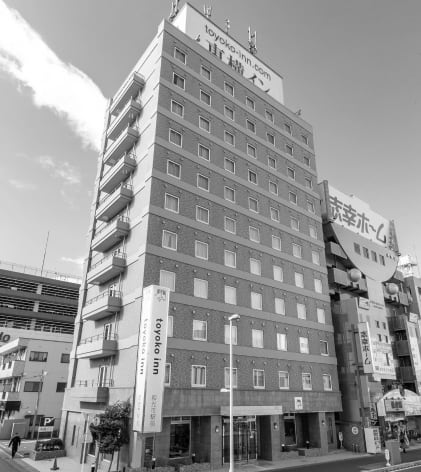
Accommodation Recommendations
The following hotels are within a 20-minute walking distance from the venue and right next to a metro station:
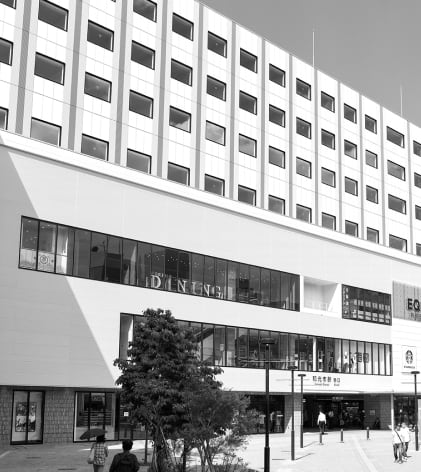

Event Location
Venue
Address
RIKEN, 2-1 Hirosawa, Wako, Saitama 351-0198, Japan