
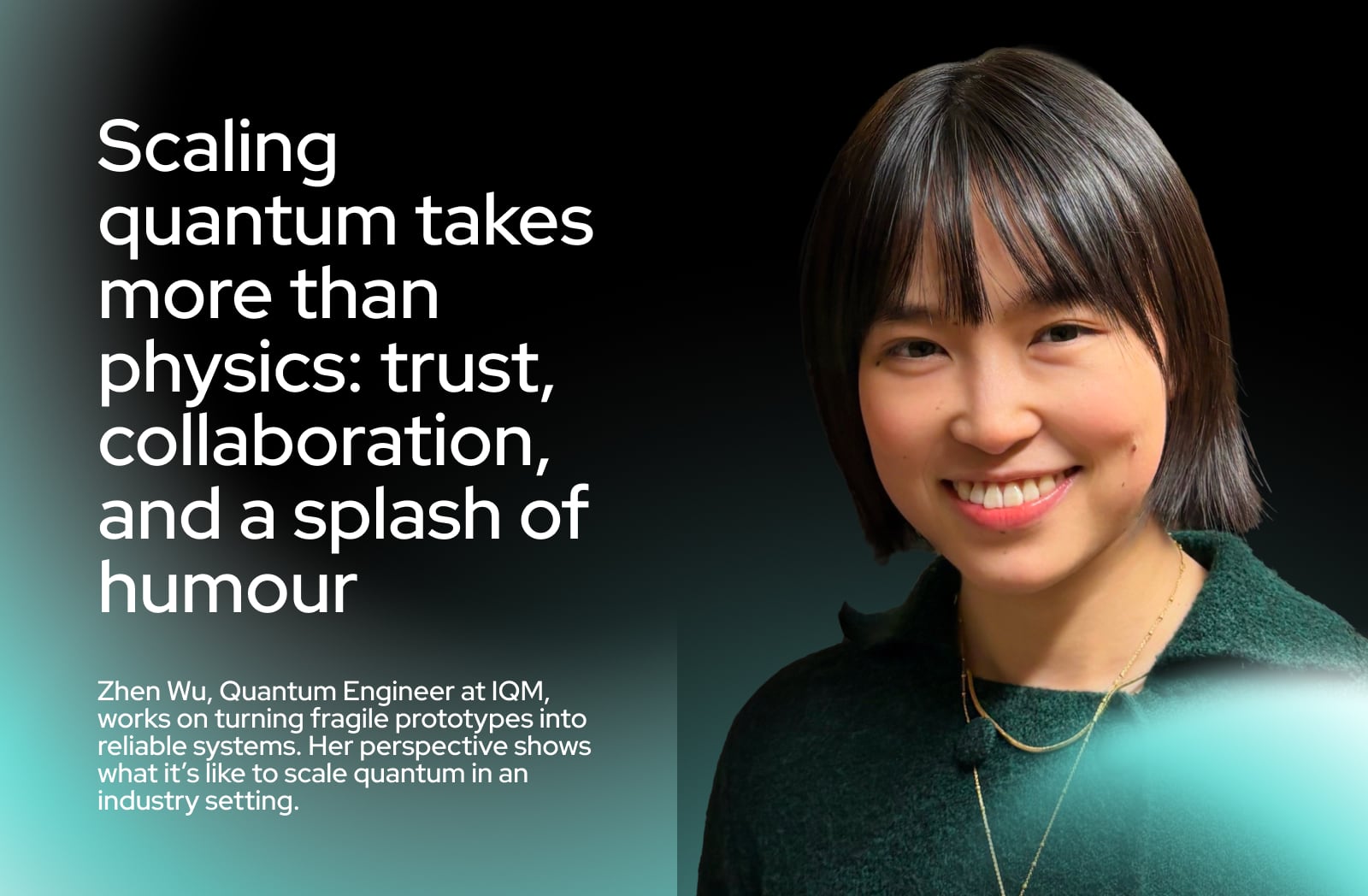
I’ve been asking questions for as long as I can remember.
What is light? Why does the universe behave the way it does? And what happens if we push those questions far enough, beyond theory and equations, into real systems?
That curiosity took me from Asia to the Netherlands, deep into applied physics and quantum research, and eventually to Finland. Today at IQM, I work on Quantum Processing Unit (QPU) packaging and integration solutions; the essential physical architecture that allows us to scale toward millions of physical qubits.
“What drives me is not just understanding theory, it’s the challenge of ensuring quantum states can survive and perform within a complex, full-stack system.”
That’s exactly why I joined.
During my PhD in quantum physics, I loved the opportunity to “play every instrument.” I owned the entire lifecycle, from quantum device design and fabrication to cryogenic measurements, data analysis, and publication. It was a deeply rewarding way to master the fundamentals, but the learning loops were long; feedback could take months, and course correction was costly.
At IQM, the rhythm is different. I work in a highly connected environment, surrounded by experts across hardware, software, algorithms, and systems integration. The feedback loop is fast, learning happens in small steps, and mistakes are part of progress.
“In academia, you play every instrument yourself. At IQM, you’re part of a symphony, and your strengths get multiplied by the collective expertise of the team.”
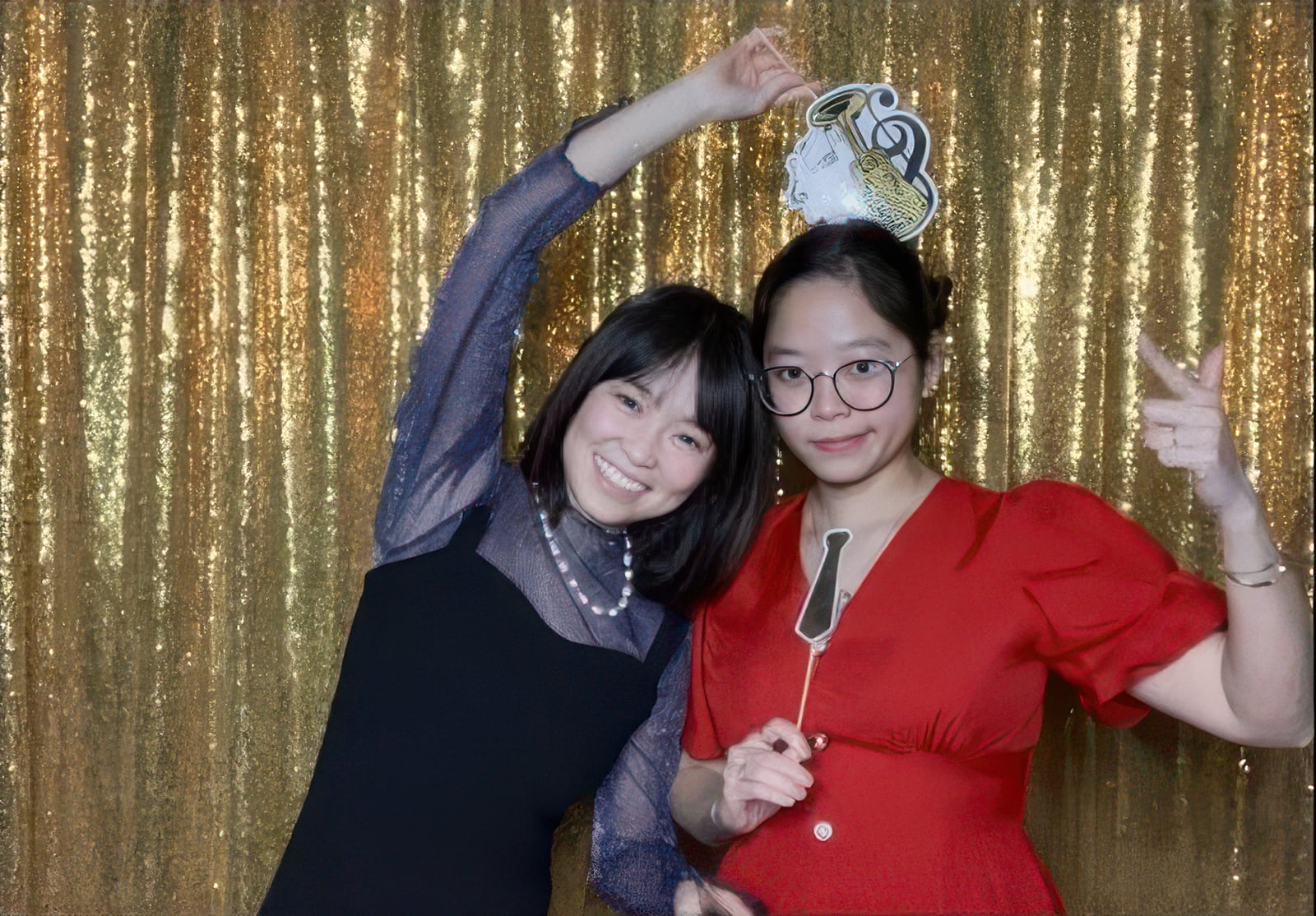
My team has people across Finland and Germany. Despite the distance, we work closely. Our weekly team lunch has become a small but important ritual, a space where conversations continue beyond tasks, and trust builds naturally.
My work focuses on high-density QPU packaging and integration, the critical interface where the quantum processor meets the cryogenic and microwave control infrastructure.
For years, quantum systems scaled through brute force. More qubits meant more coaxial cables and more control electronics. That approach is reaching its physical limits. You simply cannot route thousands of cables into a cryogenic system without hitting thermal, spatial, and economic walls.
As systems grow from a few qubits to thousands, every engineering challenge that was manageable at small scale becomes existential. This is the point where theoretical performance meets hard constraints: thermal budgets at millikelvin temperatures, electromagnetic interference, wiring density, latency, and signal integrity across thousands of control and readout paths. Because there are no industrial standards for this yet, we operate in a space of extreme uncertainty.
“This level of uncertainty is exactly what pushes us to be creative and innovate new solutions.”
We’re moving beyond the Noisy Intermediate- Scale Quantum era. Early quantum systems demonstrated fundamental principle, but they were fragile. To achieve true quantum utility, systems must transition toward fault-tolerant, high-fidelity architectures, supported by robust QPU packaging and integration to sustain production-level workloads beyond the laboratory.
That transition from impressive benchmarks to scalable, commercial systems is what excites me most.
One thing that genuinely surprised me at IQM is the level of exposure to world-class partners and collaborations across the quantum ecosystem. There’s real encouragement to initiate new projects, explore unconventional ideas, and push things forward, not just for IQM, but for the wider community.
Unlike some industry environments, IQM actively supports scientific contributions. When a paper comes out, we celebrate it in the company chat and during our weekly all-hands meetings. Patents are encouraged, too. For someone coming from academia, that matters; you don’t have to trade your research mindset for an engineering title.
“What makes this environment work is trust. The freedom to take ownership, communicate openly across disciplines, and raise issues early.”
And when pressure rises, humour kicks in. It lightens the mood and helps teams keep going.
When I imagine my future at IQM, I see myself evolving beyond the role of researcher. I want to be a bridge, connecting fundamental science, engineering realities, and commercial application.
“I’m not just answering my own questions anymore. I’m thinking about what we bring to society, to the next generation of quantum systems.”
For anyone considering a role in quantum, I’d say this: it’s not for everyone. You will be wrong more often than you think. But if you’re curious, challenge-driven, collaborative, and passionate about unsolved problems, this might be the most exciting place to be.
Give quantum a heartbeat.
Explore opportunities to join our team.