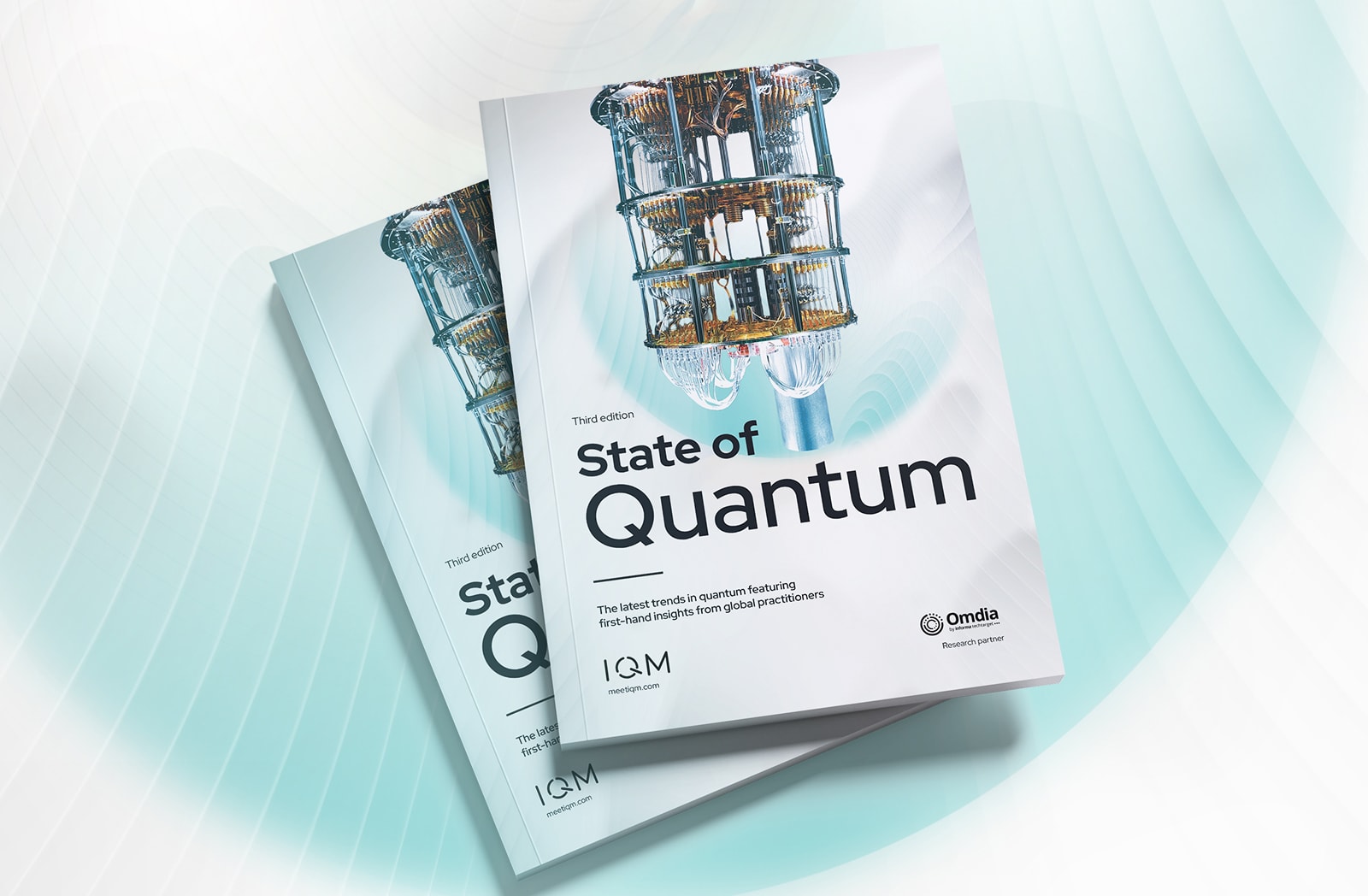
Espoo, Finland, 10th June 2025 – IQM Quantum Computers in collaboration with analyst firm Omdia (LON:INF), today unveiled the third edition of its State of Quantum report, revealing that the quantum industry must address talent shortages and software development kits (SDK) gaps in order to scale beyond just qubit count.
As quantum computing shifts from theoretical promise to practical integration, the report projects that the global quantum computing market will reach over $22 billion by 2032 as commercial deployments accelerate.
The findings also show that 75% of respondents believe that defining the right applications is the most critical factor for adoption. As Dr. Jan Goetz, Co-CEO and Co-founder of IQM, noted in his foreword, “Quantum’s promise is clear, but fulfilling it requires orchestrated progress across the hardware and software stack—transforming these powerful machines from niche tools into drivers of real-world outcomes.”
The report also argues that progress hinges on synchronising hardware industrialisation with software platform maturity. Today, software development kit fragmentation hampers portability and slows adoption in multi-vendor settings.
HPC, Quantum, and AI Integration
The report also highlights how high-performance computing (HPC), quantum computing, and AI are converging to drive the next wave of growth.
According to industry experts, investors, and users across Europe, North America, Asia, and Oceania interviewed, HPC provides the robust infrastructure and orchestration needed to integrate quantum systems into real-world environments, ensuring that quantum and classical resources work in harmony. This synergy promises to accelerate adoption, amplify returns for early adopters, and transform quantum computing from a niche capability into a trusted part of the broader scientific and industrial toolbox.
“Our interviewees identified three major challenges – one is getting to the level of reliability where quantum computers can be considered industrial products rather than crafted laboratory devices, another is improving the software layer to provide the sort of developer experience we see in the high-level frameworks used for AI, and a third is helping users identify opportunities to benefit from quantum computer and set up their experiments. Interestingly, the interviewees are expecting multiple quantum technologies to co-exist, with a degree of specialisation between them,” said Alexander Harrowell, Principal Analyst, Advanced Computing at Omdia.
Key Findings and Market Trends
In addition, the report also calls for three critical priorities to turn these insights into tangible outcomes:
The full report is available here: https://meetiqm.com/state-of-quantum/state-of-quantum-2025-third-edition/
IQM Quantum Computers is a global leader in superconducting quantum computers, delivering full-stack quantum systems and cloud platform access to research institutions, universities, high-performance computing centers, and national laboratories worldwide. IQM’s on-premises deployment model gives customers direct ownership and control of their quantum infrastructure. Founded in 2018, headquartered in Finland, it has over 350 employees. IQM operates across Europe, Asia, and North America. IQM has announced its plans to become the first publicly listed European quantum company on a major U.S. stock exchange by merging with Real Asset Acquisition Corp. (Nasdaq: RAAQ); with a dual listing on the Helsinki Stock Exchange also under consideration.
Search faster—hit Enter instead of clicking.
Click to expand